One-colour screen-print transfer on textile
The one-colour screen-print transfer combines the precision of screen printing with the ease of applying a transfer. The logo is printed in ink onto a special paper, then heat-pressed onto the garment. Ideal for precise one-colour logos, especially on jackets and technical textiles.
Request a free quote Talk to the workshop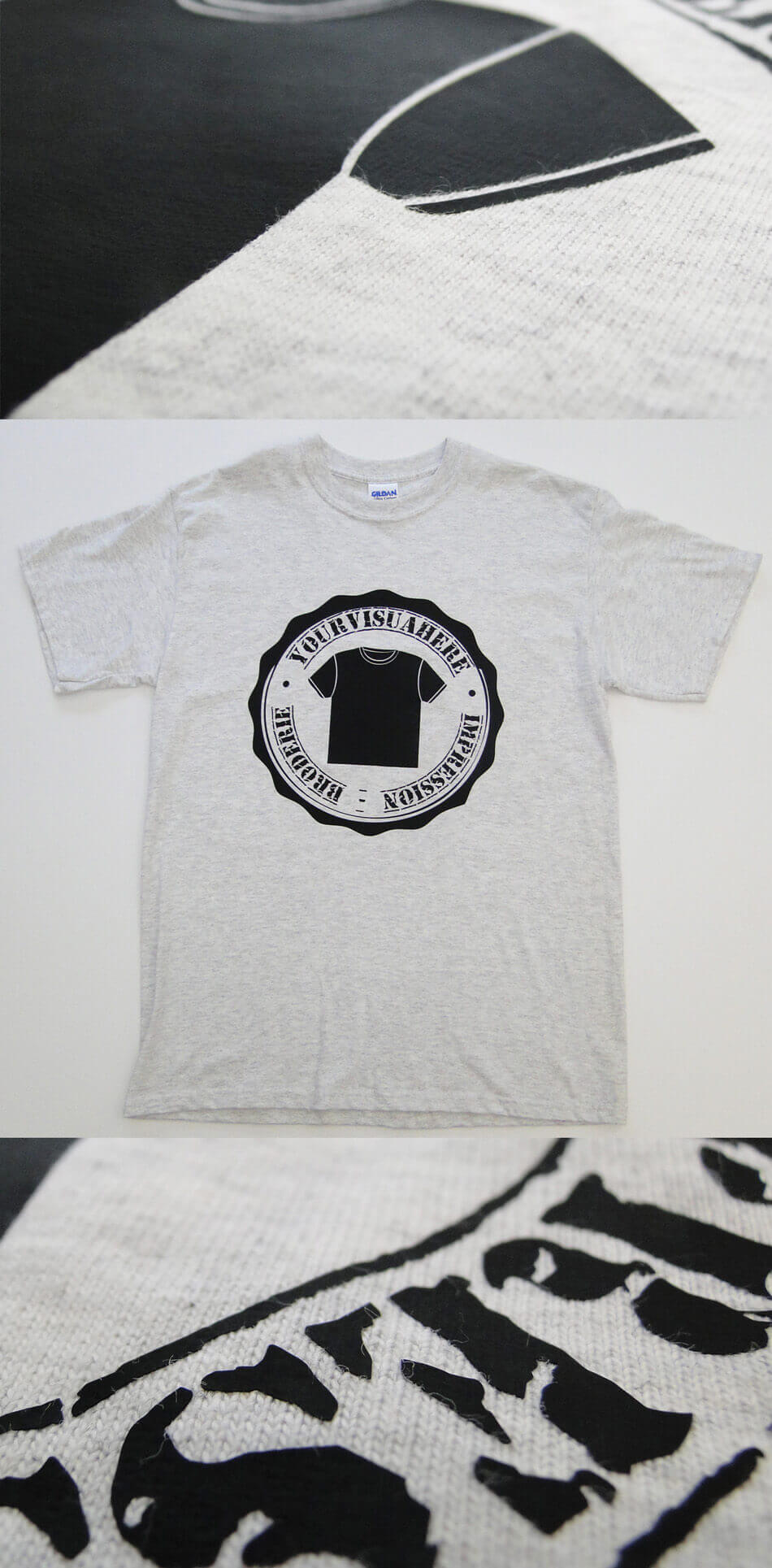
Ideal for
- One-colour logos with fine detail
- Jackets, softshells and windbreakers
- Repeated runs of the same logo
- Bags and accessories difficult to print directly
Less suitable for
- Multicolour logos (see multicolour transfer or DTF)
- Single item only (DTF or flex are simpler)
Not sure about the technique? We advise you for free in the quote.
How it works in the workshop
The film
Your logo is prepared in one colour, in vector format.
Printing the transfer
The logo is screen-printed onto transfer paper, with a thermal adhesive.
Pressing
The transfer is heat-pressed onto the garment.
Peeling
The paper is removed: only the ink stays on the textile.
The principle in a diagram
- Screen printing on paper The logo is screen-printed in one colour onto a special transfer paper.
- Thermal adhesive A layer of adhesive is added over the ink: the transfer can be stored before application.
- Pressing The transfer is heat-pressed onto the garment at the designated location.
- Peeling The paper is removed: only the ink remains, thin, flexible and very sharp.
Why choose a transfer rather than direct printing?
Some garments are ill-suited to direct printing: lined jackets, softshells, windbreakers, bags with seams or pockets. The transfer allows you to place a precise logo exactly where you want it, using a suitable press, without disassembling the garment.
Because transfers can be printed in advance, they also make restocks easier: a new employee receives exactly the same logo as their colleagues.
Transfer, flex or DTF?
- Screen-print transfer: fine, matt ink, excellent rendering of small details.
- Flex: cut film, smooth and opaque, ideal for names and numbers.
- DTF: all colours, from a single piece.
To learn more: flocage or screen-print transfer, which technique to choose?
Examples of use
Company logo on team jackets, club name on windbreakers, brand logo on a collection of sweatshirts, marking on workwear.
Models ready to personalise
A selection from our catalogue, ready for your logo.

Rebel unisex fashion bomber
from 62,74 € excl. VAT
Max men waistcoat
from 37,86 € excl. VAT
Falcon padded men parka
from 62,90 € excl. VAT
Race bw womensoftshell
from 17,00 € excl. VATCompare textile techniques
The right technique depends on your design, the quantity and the material.
| Technique | Quantity | Colours | Finish | Materials |
|---|---|---|---|---|
| Embroidery | From 1 piece | Multiple thread colours | Raised, premium | Polo shirts, sweatshirts, jackets, caps |
| DTF printing | From 1 piece | Unlimited, gradients and photos | Soft, vivid colours | T-shirts, sweatshirts, bags, jackets |
| Flex | From 1 piece | 1 to 2 colours | Smooth, opaque, effects | Jerseys, t-shirts, jackets |
| Screen printing | Medium to large runs | 1 to 4 solid colours | Soft, very durable | T-shirts, sweatshirts, tote bags |
| Transfer 1 colour | Small to medium runs | 1 colour | Fine, mat, flexible | Jackets, softshells, bags |
| Multicolour transfer | Medium to large runs | 2 to 4 colours | Sharp, faithful | Polos, jackets, sweatshirts |
| Patches | Small to large runs | Multiple thread colours | Raised, patch effect | Uniforms, jackets, bags |
Frequently asked questions
Can’t find your answer? See the full FAQ
Our other techniques
A logo, a quantity, a deadline?
Receive your detailed quote in 24 h, with the technique best suited to your project.
Request my quote Compare all techniques