Sublimation on personalised items
With heat, the sublimation ink turns to gas and penetrates the item’s coating. The image becomes one with the substrate: vivid colours, photos and gradients, with no added thickness.
Request a free quote Talk to the workshop
Ideal for
- Mugs and items with a coating designed for sublimation
- Light polyester textiles and accessories
- Very colourful photos and visuals
Less suitable for
- Dark or cotton substrates (prefer DTF or screen printing)
Not sure about the technique? We advise you for free in the quote.
How it works in the workshop
The artwork
Your file is prepared in colour.
The printing
The design is printed onto transfer paper.
The press
Heat and pressure make the ink migrate into the substrate.
Quality control
Each piece is checked.
The principle in a diagram
- Printing onto paper The design is printed in reverse onto transfer paper, using sublimation inks.
- Heat press The paper is pressed against the item at about 200 °C for a few dozen seconds.
- The ink becomes gas Under heat, the ink turns gaseous and penetrates the polyester or special coating.
- Integrated into the substrate No thickness, no hand feel: the colours become part of the material (white or light substrates).
In pictures: sublimation
Objects marked with this technique. Each product is available with your logo.
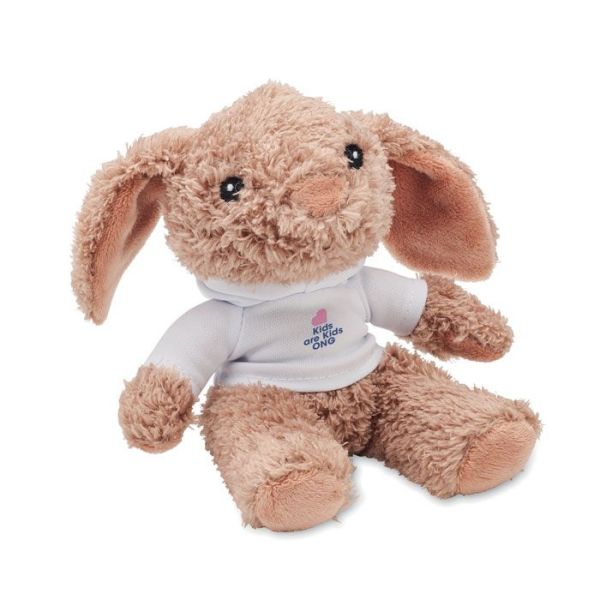 Example of branding
Plush rabbitSee product 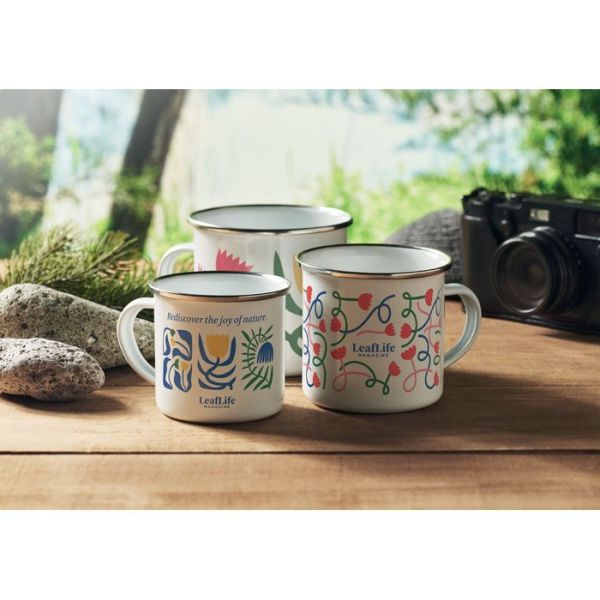 Example of branding
Enamel sublimation mug 200mlSee product 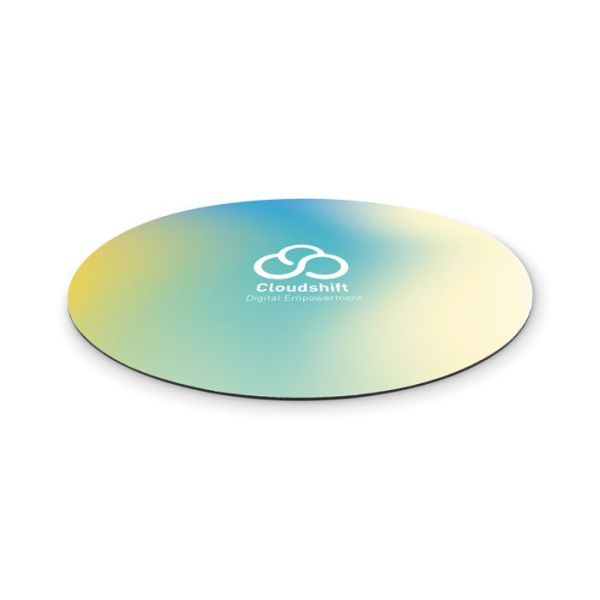 Example of branding
Mouse matSee product 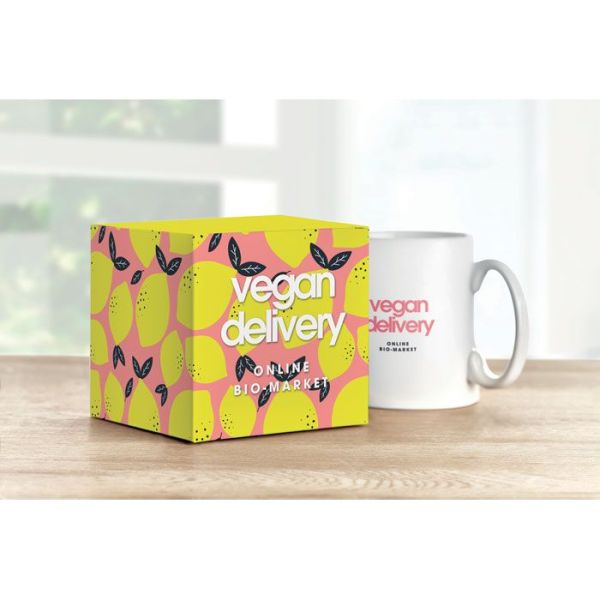 Example of branding
Sublimation box for mugSee product  Example of branding
Sublimation coasterSee product 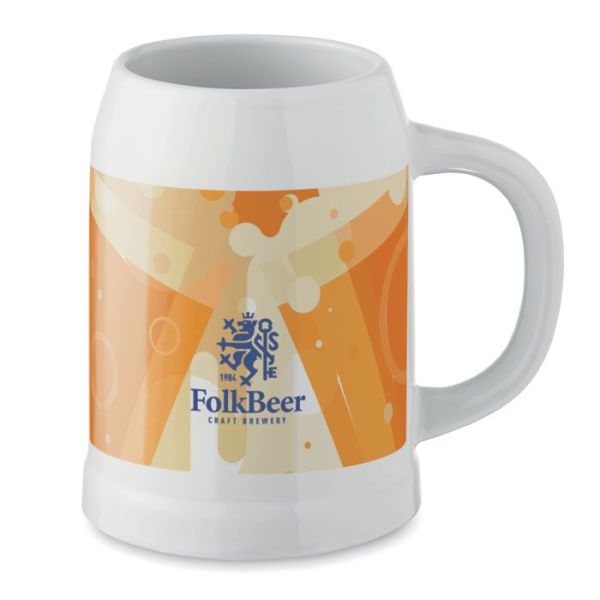 Example of branding
Beer stein 500 mlSee product
“Example of marking”: demonstration photo supplied by the product manufacturer, with a fictitious logo.
Colour in the material
Sublimation does not lay down a layer of ink: it dyes the object's coating. The result is smooth, in full colour, and suitable for photos as well as detailed logos.
Object ideas
Sublimation requires a light, compatible substrate: it is indicated on the product page when the item is suitable.
Models ready to personalise
A selection from our catalogue, ready for your logo.

Americano® Grande 350 ml insulated mug
from 5,96 € excl. VAT
Ceramic mug 300 ml
from 3,22 € excl. VAT
H2O Active® Base Tritan™ 650 ml flip lid sport bottle
from 5,06 € excl. VAT
Ocean Bottle Peak GO 710 ml recycled stainless steel water bottle
from 57,10 € excl. VATCompare techniques on items
The right technique depends on your design, the quantity and the material.
| Technique | Quantity | Colours | Finish | Materials |
|---|---|---|---|---|
| Pad printing | Runs/series | 1 in a few colours | Clean, precise | Pens, USB sticks, small items |
| Object screen printing | Runs/series | 1 to 3 colours | Opaque, solid | Bottles, mugs, bags, umbrellas |
| Digital printing | Small quantities | Unlimited, photos | True-to-colour | Mugs, bottles, notebooks, gifts |
| Laser engraving | From the first item | Tone-on-tone | Very durable | Pens, stainless steel, wood, bamboo |
| Doming | Small and medium runs | Four-colour printing | Glossy relief | Keyrings, badges |
| Embossing | Medium runs | Tone-on-tone | Elegant, pleasant to the touch | Notebooks, faux leather |
| Sublimation | Small and medium runs | Unlimited, photos | Smooth, integrated | Mugs, light polyester |
Frequently asked questions
Can’t find your answer? See the full FAQ
Our other techniques
A logo, a quantity, a deadline?
Receive your detailed quote in 24 h, with the technique best suited to your project.
Request my quote Compare all techniques